
Gnoll
| Gnolls | |
|---|---|
 Hogger, the Gnoll King | |
| Faction/Affiliation | Independent, Scourge, Axis of Awful, Venture Company |
| Character classes |
 Barbarian, Healer, Hunter, Scout Barbarian, Healer, Hunter, Scout |
| Racial leader(s) | Tribal chieftains |
| Homeworld | Azeroth |
| Area(s) | Eastern Kingdoms, Kalimdor, Dragon Isles |
| Language(s) | Gnoll, Common |
| Organization(s) | Clans,[1] packs, tribes |
Gnolls are a warlike race of vicious but simple-minded hyena-like humanoids who dwell in the Eastern Kingdoms, in Kalimdor, and in the Dragon Isles. Though highly aggressive, gnolls are notorious for being extremely unintelligent and prone to infighting, and love to let others do the hard work for them.[2]
History
Gnolls lived in the Ohn'ahran Plains until 10,000 years ago when the Maruuk Centaur arrived and pushed them away from the plains after fighting fiercely.[3] Gnolls are one of the younger races of Lordaeron.[4] Brann Bronzebeard believes that the gnolls may be descendants of a hyena Ancient Guardian, though for the moment this is only a theory.[5]
Around the year 2,700 BDP, gnolls were among the threats that early human settlers faced in the Tirisfal Glades.[6]
The Gnoll War
- Main article: Gnoll War

Though normally a disorganized and brutish race, 75 years prior to the First War the gnolls became a major threat to the kingdom of Stormwind. Under the leadership of the cunning packlord Garfang, the gnolls began attacking farmsteads, convoys and villages, until they even began launching full-scale attacks upon Stormwind City itself. The so-called Gnoll War came to a close when King Barathen Wrynn, thereafter known as "the Adamant", rode with a small party of knights into the Redridge Mountains and killed Garfang. Without a unified leader, the raiders fell to infighting, allowing King Barathen and his soldiers to decimate the gnolls and scatter them across the land.[2]
Recent history


Shortly before the Third War, a half-starved pack of gnolls pillaged a farmhouse of Alicia near Strahnbrad in Lordaeron, stealing livestock and kidnapping a young boy named Timmy. They took him to their hideout in the forest and caged him. Fearing they would eat him, Alicia asked Prince Arthas to rescue Timmy. After Arthas found the hideout, defeated them, and released Timmy, Alicia arrived to the hideout and took Timmy home.[7]

The cunning gnoll packs of the Redridge Mountains have notoriously plagued the human and dwarven kingdoms alike. Recent times, however, have seen the Riverpaw pack of gnolls became a more ominous threat, raiding farms and human villages throughout Elwynn Forest. Many speculate that the historically dimwitted gnolls have conspired with another force, which is equipping them with weapons, tactical leadership, and magic. Though it is unclear what the gnolls are after, the Stormwind marshals have now realized that the creatures pose an obvious threat to the kingdom and must be eradicated.[8]

A force to be reckoned with in the Azure Span on the Dragon isles are a savage clan of shamanistic gnolls that have harnessed the power of decay, darkening their wetland home with vile pockets of thorns and roots.[9]
Description


Indigenous to both the Alterac Mountains and the Redridge Range far to the south, the hyena-like gnolls are extremely aggressive and are often found quarreling amongst themselves. Though relatively intelligent compared to most beasts, they are not very bright by human standards. They have been known to manipulate each other into fights over ridiculous things like "whose shadow is larger". It has often been stated that the gnolls would be quite a fearsome race, if they ever stopped tearing each other to pieces long enough to organize themselves into an army.[4]
Gnolls are brutish and belligerent creatures who value strength over everything else and are fierce and formidable in battle, but are not the most intelligent of races. Gnolls have been employed as mercenaries, but their penchant for vicious fighting and their limited intelligence require constant supervision.[10] Gnolls are unfortunately as resilient as they are brutish and stupid.[11]
However, not all gnolls are as stupid as they seem, for there's animal cunning even among them. The gnolls run as a pack, and every pack has alphas: The biggest, strongest, and most ruthless members that claw their way to dominance; they're the ones giving orders.[12]
A Kirin Tor mage once managed to gain the favor of a gnoll clan leader in Redridge by performing a simple spell — the kind taught to Dalaran's school children. For a day, the gnoll became very friendly to the sorcerer, until he forgot the trick and sicced his hunters on the mage. Before that, the Kirin Tor member discovered that "when they can be bothered to pay attention long enough", gnolls tend to focus on elemental shamanism.[13]
Males and females alike stand at an average of 5 ft. tall once adults,[14] but even as teenagers they stand at around 4.5 ft.[15] Some gnolls can stand at over 6 ft. tall.[16] Gnolls are known to be able to leap to great heights with their powerful legs,[17] and tend to run on all fours when chasing prey or fleeing battle.[18]
Despite being warlike, they can be traded with and even befriended. They are able to laugh.[19] Their friendly interaction with other races starts after they fight with them and eventually laugh together.
Culture
Though most clans are not open for trading, those that are require a show of strength and respect before trading can begin, usually through combat with the singular gnoll or the leader of the gnoll clan.[20] It is common tradition that when a gnoll dies, the members of his/her clan devour the body.[21] To a gnoll, meat is meat, and they will even go so far as to kill and cannibalize outcasts who return to their territory.[22] Gnolls have been known to enslave kobolds, forcing the cave-dwelling creatures into a life of neverending drudgery.[8][23]
Female gnolls exist and hold co-leadership roles as Matriarchs, but sometimes control whole clans.[24]
A gnoll's favorite food of all time are hardboiled chicken eggs pickled in brine.[25] They absolutely hate ogre meat, however.[26]
Some gnolls share the same name as their parent.[27]
During the Third War, many gnolls were armed with crossbows. This is still true among the gnolls of the Azure Span and of the Woodpaw clan.[28]
Quotes
Some common gnoll utterances include:
- Grrrr... fresh meat!
- More bones to gnaw on...
Locations
Gnolls' main stomping grounds are the Eastern Kingdoms. Recently, they have also been seen in Kalimdor, though usually under the employ of one of the goblin cartels or pirate groups, although a few independent gnoll tribes have been seen in Feralas. A gnoll seer named Sayge travels with the Darkmoon Faire as well. He gives out fortunes and different buffs based on how you answer his questions.
Gnolls were first seen in Warcraft III: Reign of Chaos. Thrall leaves his home after a dream tells him to meet with a stranger. He destroys a camp of gnolls, and levels up. The gnolls in question were most likely Mosshide gnolls, due to their location and coloration.
Tribes and organizations

- Blackmane Mercenaries — A mercenary group who allied with the Zandalari trolls during their invasion of Kun-Lai Summit. Led by Captain Ripflesh.
- Blackpaw — Found at the Underlight Mines in the Ghostlands.
- Brackenhide tribe - Found in the Azure Span. Led by Decatriarch Wratheye.
- Grimtail * — Found in Desolace.[29]
- Mosshide — Founders of the Axis of Awful. Found in the Wetlands and Loch Modan. Led by Sagepaw.
- Mudsnout — Found in the Hillsbrad Foothills.
- Palemane — Found in Mulgore.
- Redridge — Found in the Redridge Mountains. Led by Yowler.
- Redpine — Found in the Western Plaguelands.
- Riverpaw — One of the most notorious gnoll packs. Allies of the Defias Brotherhood. Led by Hogger.
- Rot Hide — A group of undead gnolls found in Tirisfal Glades and formerly Silverpine Forest. Loyal to the necromancer Thule Ravenclaw.
- Savage Hill — Found in the Storm Peaks. Led by Gnarlhide.
- Shadowhide — Found in the eastern Redridge Mountains. Led by General Fangore.
- Wildpaw — Found in Alterac Valley.
- Woodpaw — Found in Feralas.
* Not seen in World of Warcraft.
Notable


In Warcraft III
| Unit name | Level | Hit points / mana | Armor | Attack type | Damage per hit | Abilities | |
|---|---|---|---|---|---|---|---|
 
|
Gnoll | 1 | 240 | 0 (flesh) | Melee | 10-11 | - |
 
|
Gnoll Poacher | 1 | 240 | 0 (flesh) | Ranged | 13-15 | - |

|
Gnoll Brute | 3 | 400 | 1 (heavy) | Melee | 14-15 | - |
 
|
Gnoll Warden | 3 | 330 / 300 | 0 (medium) | Ranged | 21-29 |  [Purge] [Purge]
|

|
Gnoll Assassin | 3 | 320 | 1 (medium) | Ranged | 21-29 | Envenomed Weapon |
 
|
Gnoll Overseer | 5 | 750 | 3 (heavy) | Melee | 24-27 | Command Aura |
As a companion pet
- Main article: Hogs' Studded Collar
 [Hogs' Studded Collar] is a reward from
  [That's Whack!] at the Darkmoon Faire.
In the RPG
Introduction

Gnolls are known for their beastly cunning, their ferocious tempers, and their penchant for infighting. Though more intelligent than beasts, they tend to lack the finer reasoning of other sentient races. They enjoy fighting — almost too much. Gnolls make their home in Lordaeron in the Alterac Mountains and the Redridge Mountains, but they have spread throughout Azeroth, even to Kalimdor, where they compete with other aggressive humanoids for hunting grounds. Their tendency to challenge each other over petty matters (such as who is the tallest) prevents them from achieving any real unity and thus lessens their overall threat. This is fortunate, for their numbers are such that they could easily overrun other races of equivalent strengths. Occasionally, gnolls hire out as mercenaries, either as individuals or in small packs of two to five warriors.[30]
Gnolls are hyena-like humanoids standing about 7 feet tall. Gnolls of the same tribe tend to share a similar appearance, with either a reddish-brown, black, greenish-gray, or yellow mane. Eyes range in color from pale blue to bloodshot red and are typically small and close-set in the head. In wet conditions, they give off a distinctive musky odor. As carnivores, gnolls consider all creatures as food, including members of their own race. Hunger, not gold or magic, is what motivates them. They have no love for other races, preferring to eat rather than work with them. Any alliances made will last only as long as the gnolls are well-fed or are cowed with displays of force. Gnolls, being lazy and feral, have little natural industry. They are capable of limited crafting, but no metal work. They do not mine or farm, relying instead on a nomadic existence and hunting.[31]
Gnolls like to attack when they have the advantage of numbers, using group tactics and their physical strength to overwhelm and knock down their opponents. They show little discipline in battle unless they have a strong leader; at such times, they can maintain ranks and fight as a unit. While they do not usually prepare traps, gnolls do use ambushes and try to attack from a flanking position. They always take special care to seek the most favorable conditions possible (such as darkness, cover, or some other form of advantageous condition or terrain) when laying ambushes.[30]
Gnolls are known for their habits as raiding marauders or hired soldiers. Though they have average intelligence, they are easily duped by promises of food or treasure.[32]
Society

Gnoll society is organized entirely around might. The strongest and deadliest gnolls ascend in the tribal order to become the leaders, while the weaker gnolls soon become food for the rest. This lifestyle means the average gnoll tribe is always in a state of tension- the slightest sign of weakness in those leading can cause the tribe to turn upon itself in a frenzy of violence. It also prevents the gnolls from organizing for very long into anything more than a tribe. Gnoll society displays a limited specialization. Brutes are the largest and nastiest gnolls, made stronger by their privileged position in the food chain. Gnoll assassins are noted for their intelligence and use complex weapons such as bows and poisons. Gnoll poachers act as scouts and hunters for the gnoll tribes and use weapons taken from prey. Gnoll wardens have developed a magical connection with nature and use their powers to keep the other gnolls in line.[31]
Gnolls do well as hunters or warriors. Their inborn aggression and decidedly cruel nature drive them to pursue their quarry for the sheer pleasure of the capture and, usually, the kill. Gnoll spellcasters tend to be shaman with strong elemental and warlike tendencies. Occasionally a gnoll might join an adventuring party in pursuit of a common enemy. Sometimes a gnoll is ousted from gnoll society and must make his way in the world outside. Adventuring bands who value aggressive, persistent hunters and warriors may allow a gnoll to join them. Gnoll characters may take up with either Alliance or Horde, depending on which group has been their primary enemy. (More often than not, though, they join the Horde.) A few operate independently, hiring themselves out as mercenaries to the highest payer. Gnolls are strong-limbed and fierce, but they are poor planners with little forethought and deficient leadership qualities.[33] The Defias Brotherhood have been known to ally with Gnolls occasionally.
Gnolls are extremely violent creatures. They have been known to pick lethal fights with each other over such insane arguments such as who has the longer shadow. Many wonder how these pugnacious creatures ever stand each other long enough to breed. They only gather in large groups when the opportunity for battle or plunder arises. They make vicious, if unreliable mercenaries, as they will go anywhere they can be offered a good fight. It is believed by some that if the gnolls were ever to put aside their differences long enough to band together into a single group, they would make a formidable army.
Lazy and feral, gnolls prefer to pillage and steal what they want rather than working for it. The largest, strongest gnoll in a group is known as the Brute. He is the de facto leader of the tribe, and all others submit to him. Brutes are allowed to take the best loot from raids, leaving what they don't want for the others to fight over.
There is a possibility that gnolls eat other sapient races (see Little Timmy) and gnoll mobs sometimes say the line "More bones to gnaw on."
While most gnolls use melee or ranged weapons, some can use shamanistic or even warlock magic. Their favored weapons are maces (or other blunt weapons) and crossbows. They prefer blunt weapons because they break bones, as marrow is considered a delicacy, and because they are easy to make. When dealing with magic, gnolls prefer the nature and lightning schools. Smaller gnolls and runts are used as assassins and scouts because of their agility.
Gnolls are known to build small settlements with permanent structures (Gnoll Huts) and to mine gold. Gnolls have been seen using complex mining techniques such as railcarts and have been seen in extremely remote and dangerous locations mining gold. They have been sighted in the Jangolode Mine, allied with the Defias brotherhood.
Many gnolls can be seen wearing a round crest with a paw print in the middle. This symbol is seen in many tribes and its exact meaning is unknown to other races. Gnolls are known to wear leather and metal armor and always wear clothes.
Languages
Gnolls speak Low Common, though some speak with a broken Common. Gnolls learn the languages of those they interact with. These are the languages spoken by the races most likely to interact with gnolls: Common, Darnassian, Orcish, Thalassian, and Zandali.[33] The language Gnoll is a language known by the skeletal mage, Chauch-eta,[34] however, it is apparently no longer spoken by gnolls or is another name for their dialect of Low Common. A few gnolls knew Common as a primary language [35], or least a broken Common. However, this appears to be uncommon in recent times.[33]
Notes
Gallery
- World of Warcraft
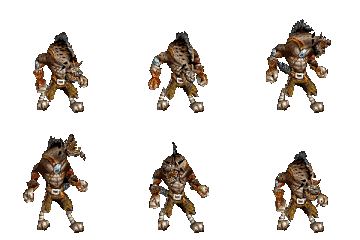
A gnoll in World of Warcraft.
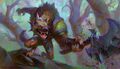
Art of Hogger for the release of World of Warcraft: Classic.
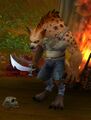
Yowler, a typical gnoll.
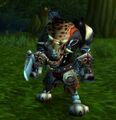
Hogger, an armored gnoll.
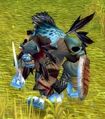
A Palemane Poacher, a gnoll wearing a robe.
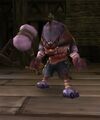
Maggot Eye, an undead gnoll.
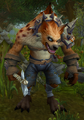
New gnoll model in Dragonflight.
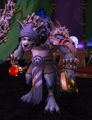
New gnoll model in Dragonflight.
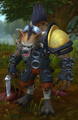
Hogger's updated model in Dragonflight.
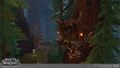
Gnoll treehouse in Dragonflight.


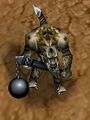
A Gnoll in Warcraft III.
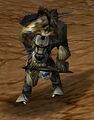
A Gnoll Poacher in Warcraft III.

Gnoll icon portrait in Warcraft III.

Gnoll poacher icon portrait in Warcraft III.
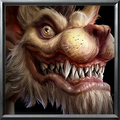
Gnoll icon portrait in Warcraft III: Reforged.
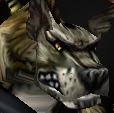
A Gnoll portrait
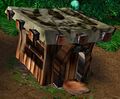
A Gnoll Hut in Warcraft III.
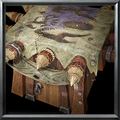
A Gnoll Hut in Reforged.
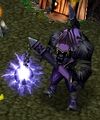
A Gnoll Warden in Warcraft III.

A Gnoll Warden icon portrait in Warcraft III.
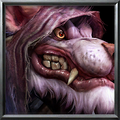
A Gnoll Warden icon portrait in Reforged.
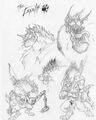
Gnoll concept art for Warcraft III.
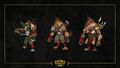
Gnoll concept art for Warcraft III: Reforged.


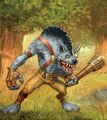
Snaggle (Worldbreaker)
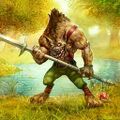
Soggypaw (Worldbreaker)
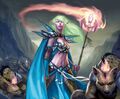
A priestess using Mind Soothe on gnolls.


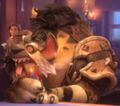
A Gnoll in New Pack Day.


- Other

Sayge art.
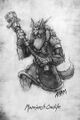
Cackle, a female gnoll in Traveler.
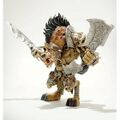
Gangris Riverpaw action figure.
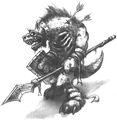
A withered gnoll in the Manual of Monsters.
Dragonflight concept art of a gnoll child.
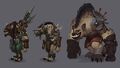
Dragonflight gnoll concept art.
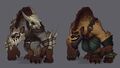
Dragonflight gnoll concept art.
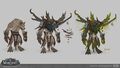
Dragonflight concept art of a gnoll shaman.
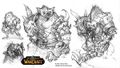
Mongrel Horde concept art.
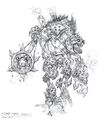
Mongrel Horde concept art.
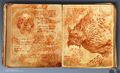
Sketches created for a book prop for the Warcraft movie, including a depiction of a gnoll.
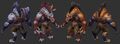
Gnoll models used in the Alterac Pass battleground in Heroes of the Storm.
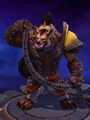
Hogger in Heroes of the Storm.
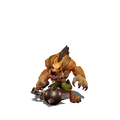
Gnoll Brute in Warcraft Arclight Rumble.


Patch changes
- Patch 10.0.0 (2022-10-25): Model updated.
References
- ^ Traveler: The Spiral Path
- ^ a b World of Warcraft: Chronicle Volume 1, pg. 159 - 160
- ^ The Gnoll Wars
- ^ a b Warcraft III manual, pg. 139
- ^ World of Warcraft: The Magazine Volume 2 Issue 1
- ^ World of Warcraft: Chronicle Volume 1, pg. 133
- ^ The Defense of Strahnbrad (WC3 Human)
- ^ a b The World of Warcraft Bestiary
- ^ https://worldofwarcraft.com/en-us/news/23823429/dragonflight-zone-preview-the-azure-span
- ^ Ultimate Visual Guide, pg. 178
- ^
 [15-30] Alpha Strike
- ^
 [15-30] Alpha Strike
- ^ The Old Wizard's Almanac
- ^ Traveler, pg. 10
- ^ Traveler, pg. 268
- ^ Traveler: The Spiral Path, pg. 52
- ^ Traveler, pg. 11
- ^ Traveler, pg. 280
- ^ Traveler
- ^ Traveler, pg. 16
- ^ Traveler, pg. 355
- ^ Traveler: The Spiral Path, pg. 54
- ^ [5-30] Who's In Charge Here?
- ^ Cackle
- ^ Traveler, pg. 15
- ^ Traveler: The Spiral Path, pg. 45
- ^ [7-30] Still Assessing the Threat
- ^ Traveler: The Shining Blade, chapter 34
- ^ Traveler
- ^ a b Monster Guide, pg. 82
- ^ a b Manual of Monsters, pg. 50
- ^ Warcraft: The Roleplaying Game, pg. 240
- ^ a b c Monster Guide, pg. 83
- ^ Manual of Monsters, pg. 147
- ^ Manual of Monsters, pg. 151
- ^ Traveler, pg. 50
External links
| |||||||||||||||||||||||

| |||||||||||||||||||||||||||||||||||
es:Gnoll