
Death knight
- This article is about the playable class in World of Warcraft. For other uses, see Death knight (disambiguation).
 Death Knight | |
|---|---|
 | |
| Available to |
 All playable races (except Dracthyr) All playable races (except Dracthyr) |
| Specializations |
 Blood (tank) Blood (tank) Frost (melee DPS) Frost (melee DPS) Unholy (melee DPS) Unholy (melee DPS) |
| Resource(s) | Runic Power, Runes |
| Primary attribute | Strength |
| Weapon skills | Polearms, One-handed, Off-hand or Two-handed Swords, Axes and Maces |
| Armor type | Plate; can also equip Mail, Leather, Cloth. |
| Signature abilities |
 [Death Grip] [Death Grip] [Death Strike] [Death Strike] [Death Coil] [Death Coil] [Obliterate] [Obliterate] [Death and Decay] [Death and Decay] |
“All that I am: anger, cruelty, vengeance - I bestow upon you, my chosen knight. I have granted you immortality so that you may herald in a new, dark age for the Scourge.”
Death knights, often abbreviated to DK, are melee fighters that wield dark magic and runeforged weapons. Firstly introduced in Warcraft II, then as a hero unit in Warcraft III, the death knight was the first hero class of World of Warcraft, introduced in the Wrath of the Lich King expansion. Each death knight of the game's original 8 races begins at level 8 have a unique starting experience in Plaguelands: The Scarlet Enclave. However, the more recent death knights risen by Bolvar Fordragon instead start at level 10 and are sent directly to their faction's capital city.
Death knights engage their foes up-close, supplementing swings of their weapons with dark magic that renders enemies vulnerable or damages them with unholy power. They drag foes into one-on-one conflicts, compelling them to focus their attacks away from weaker companions. To prevent their enemies from fleeing their grasp, death knights must remain mindful of the power they call forth from runes, and pace their attacks appropriately. To protect themselves and their fellows from death in battle, death knights gird themselves in heavy armor and parry attacks with their blades. They have a personal connection with their blades, and can forge runes onto them in order to increase their power. These runeblades are empowered with dark magic and they can expend the power of their runes for vicious attacks.[2]
Death knight talents can bolster their defensive abilities by focusing on their ability to heal themselves, increase their damage and spell attacks, or summon forth minions and diseases by making use of their runes:
- Blood death knights are dark guardians who manipulate and corrupt life energy to sustain themself in the face of an enemy onslaught.[2]
- Frost death knights are harbingers of doom, channeling runic power and delivering vicious weapon strikes.[2]
- Unholy death knights are masters of death and decay, spreading infection and controlling undead minions to do their bidding.[2]
Primary death knight attributes are strength and stamina. Most important secondary attributes are usually Haste and Critical Strike, though certain specializations and rotations may favor Mastery.
Class overview
When the Lich King's control of his death knights was broken, his former champions sought revenge for the horrors committed under his command. After their vengeance was won, the death knights found themselves without a cause and without a home. One by one they trickled into the land of the living in search of a new purpose. Frost sharpens their strikes; blood fortifies their bodies; and undeath allows them to erupt in unholy rage in the heat of battle. A thousand atrocities are etched in the eyes of every death knight, and foes who gaze into them too long will feel the warmth pulled from their bodies, replaced with cold steel.[3]
When the Lich King's control over his death knights was broken, his former champions found their new purpose as Knights of the Ebon Blade. After Bolvar Fordragon donned the helm to keep the undead Scourge contained, he called forth a new generation of death knights to join the Ebon Blade's cause.[2]
Creation screen description
- Death knights are a hero class, which means they start at high level. Death knights are a melee class with an emphasis on causing diseases and using dark magic.
Background

- See also: Death knight races
Creations of Gul'dan

- Main articles: Death Knight (Warcraft II), Death knight organizations#Of the Horde

These soldiers of darkness were created by Gul'dan to replace the slaughtered Warlock clans. Assembled from the corpses of the Knights of Stormwind slain in the last battles of the First War, these abominations were then instilled with the ethereal essence of the Shadow Council, now serving the Horde in a blasphemous state of eternal undeath. Further empowered with magical energies culled from the slain necrolytes, the death knights wielded an arsenal of necromantic and elemental spells that mete out all but certain death to the enemies of the Horde.[4]
The original death knights were created for Orgrim Doomhammer by Gul'dan as powerful soldiers of the Horde. These death knights were created by placing the souls of the slain warlocks of the Shadow Council into the corpses of fallen Stormwind knights, the first of whom was Teron Gorefiend. Unlike modern death knights of the Scourge, these ghoulish fiends were not battle-hardened warriors; they were insidious necromancers who possessed superior intellect and tremendous magical power. They often favored the use of terror tactics and reanimated the corpses of enemy soldiers who fell in battle to serve them as mindless undead minions.
Most of these death knights were destroyed during and after the Second War, either killed by the Alliance or transformed into liches by Kil'jaeden.
Fallen Knights of the Silver Hand


- Main articles: Death Knight (Warcraft III), Death knight organizations#Of the Scourge
Death Knights were once virtuous defenders of Humanity. However, once the Paladin ranks were disbanded by the failing Alliance, many of these holy warriors traveled to the quarantined lands to ease the suffering of those left within the plague-ridden colonies. Though the Paladins were immune to disease of any kind, they were persecuted by the general populace who believed that they had been infected by the foul plague. A small band of Paladins, embittered by society's cruelty, traveled north to find the plague's source. These renegade Paladins succumbed to bitter hatred over the course of their grueling quest. When they finally reached Ner'zhul's icy fortress in Northrend they had become dark and brooding. The Lich King offered them untold power in exchange for their services and loyalty. The weary, vengeful warriors accepted his dark pact, and although they retained their humanity, their twisted souls were bound to his evil will for all time. Bestowed with black, vampiric Runeblades and shadowy steeds, Death Knights serve as the Scourge's mightiest generals.[5]
Years after the destruction of Draenor, the immensely powerful Lich King created a new breed of death knights: malevolent, rune-wielding warriors of the Scourge. The first and greatest of these was the Lich King's chosen champion, Prince Arthas Menethil, once a mighty paladin of the Silver Hand, who sacrificed his soul to claim the runeblade Frostmourne in a desperate bid to save his people. The rest were primarily made up of other fallen warriors or paladins whose souls were twisted and bound to the will of the Frozen Throne.[5] Unlike Gul'dan's death knights, these dark champions possessed unholy strength, however, they did not possess free will and their minds were inexorably entwined with and dominated by the Lich King's vast consciousness. Despite the heavy costs of free will, some powerful mortals were intrigued by the promise of immortality and pledged their souls freely into the Lich King's service to achieve it.
In the years since Arthas shattered the Frozen Throne and merged with the Lich King, the power and fury of the death knights only grew. These unrelenting crusaders of the damned eagerly awaited the Lich King's command to unleash their fury on Azeroth once again.[6]
The Death Knights of Acherus

- Main article: Knights of the Ebon Blade

A hero... that's what you once were. You stood boldly against the Shadow and purchased another dawn for the world... with your life. But the evil you fought is not so easily banished; the victory you claimed, not so easily held. For now, the specter of death looms over the world yet again and it has found new champions to bring about its final reign. Knights of darkness, wielding runes of death and destruction, bound by the will of the Lich King. This is the hour of their ascension! This is the hour of your dark rebirth...[7]
Death knights are the former champions of the Scourge. They fortify their bodies and drain life energy itself with the power of blood, sharpen their blades and strike powerfully with the power of frost, and raise the dead while striking with the unholy fervor granted by undeath. They are engines of destruction chosen by the Undead Scourge to serve the almighty will of the Lich King.[3]
The playable death knights are the uniformly undead[8] members of the Death Knights of Acherus, a regiment consisting of hundreds[9] of death knights stationed at the necropolis Acherus: The Ebon Hold under the direct command of the Lich King and Highlord Darion Mograine. These death knights were set loose upon the Scarlet Enclave, culminating in the flight of the newly-formed Scarlet Onslaught to Northrend, and the subsequent massacre in which the death knights decimated Scarlet reinforcements. After this, the Death Knights of Acherus were sent to Light's Hope Chapel to destroy the Argent Dawn.
During the Battle for Light's Hope Chapel, the Lich King, in betrayal of his death knights, was willing to sacrifice them to kill Highlord Tirion Fordring. However, when Tirion emerged to defend Light's Hope Chapel, along with the paladins of the Silver Hand and the Argent Dawn, he unleashed his holy fury against the invading armies of undead. The Light overwhelmed the might of the Scourge, immediately killing all the undead forces in the immediate area, while Darion Mograine and his death knights knew defeat.[10]
The freed death knights took Acherus from the Scourge and formed the Knights of the Ebon Blade under the command of Highlord Mograine. The Ebon Blade sent many of its freed death knights to their respective factions – Alliance or Horde. The Knights of the Ebon Blade would later become a major factor in the death of the Lich King Arthas Menethil, joining the Argent Crusade to form the Ashen Verdict. They also played a considerable role in defeating the Legion during their invasion several years later, moving Acherus to the Broken Isles and accepting the leadership of Bolvar Fordragon, the new Lich King, in exchange for his assistance in holding back the Scourge and helping them in their efforts against the Legion.
Death knights of formerly Alliance races could potentially make individual cases in order to join the Forsaken under Sylvanas Windrunner. For example, if a worgen death knight proved his loyalty beyond a doubt, he may be allowed to serve under Sylvanas. However, this is considered extremely uncommon, and no known undead worgen character has yet to join the Horde in the lore.[11]
Undeath as a knight

Psychologically
- After being raised by the Lich King and regardless of their past life, almost all death knights embraced the honor of their new status. However, there were the rare few that were reanimated and retained emotion and memory, and in some cases, fear. These "unworthy initiates" to the dark brotherhood were then disposed of, fed "alive" to ravenous ghouls. Death knights afflicted by the worgen curse had their feral instincts shattered in favor of the Lich King's will. This held true even after their freedom from the Lich King.[12]
- All death knights are inflicted with an "addiction" of sorts, referred to as the "eternal hunger" by Highlord Darion Mograine and as the "endless hunger" by the dread Instructor Razuvious. A death knight will feel immeasurable pain and agony if it is not inflicting suffering and/or death on a regular basis. The pain is so great that failure to sate the hunger could result in the death knight becoming lost in a blood-seeking, murderous frenzy. After sating the hunger soon upon creation, a death knight is then instructed to duel other death knights in a ritual known as Death's Challenge, which was born from the Lich King's victory over Illidan Stormrage in the frozen wastes. The hunger even overrides magic dependency.[13][14][15]
- Despite their previously evil and currently somewhat amoral natures, some death knights remained true to a code of honor even during their service to the Scourge — or, at least, to a semblance of order and discipline. For example, the human Thassarian and the blood elf Koltira Deathweaver shared a close friendship that other death knights such as Orbaz Bloodbane looked down upon. The fallen paladin Sir Zeliek was unique in the fact that, while his body was forced to obey the Scourge's commands, he had managed to retain his sanity and morals despite his corruption.

- Without the protection of the Lich King, shades from the Realm of Shadows constantly torment death knights that were liberated from his service.[16] Death knights can feel positive emotions for a brief time and rarely. Bad emotions like remorse and pity, they feel deeply.[17]
- Despite all the psychological conditioning and trauma they went through, some knights are able to act mostly like they were before their death, and a considerable number seemed to have rejoined the ranks of Alliance and the Horde militaries after their liberation from Acherus.[18][19] This includes Thassarian, who served among the Alliance and saved his own sister Leryssa even as a death knight, and later affirmed a mutual respect between Koltira Deathweaver despite their opposing political loyalties.[20]
- Some death knights of the Ebon Blade, along with members of the Argent Crusade, are watching Sylvanas and the Forsaken very closely, as similarities between her and the Lich King increased after the Cataclysm, implying they do not necessarily approve of her tactics and policies.[21]
- The new generation of the Four Horsemen is made entirely of souls which voluntarily agreed to be raised as death knights and serve the Lich King, Bolvar Fordragon, and despite initial doubts about Bolvar, they resolved to continue to serve him, after Sylvanas tore open the Veil between the living world and the Shadowlands.
Biologically
- Most death knights resemble their living selves, though pale and with an unholy light that illuminates their eyes. Others may lack the eye illumination and have tattoos decorating their faces. Death knights that were formerly human may look like Forsaken or even skeletons after some time, examples being Marduk Blackpool, the Black Knight and Lord Darkscythe.
- A thousand atrocities are etched in the eyes of every death knight, and foes who gaze into them too long will feel the warmth pulled from their bodies, replaced with cold steel.[3]
- While in the Scourge, death knights are known to have eaten meals consisting primarily of humanoid meat, vermin, and insects.[22] Death knights can enjoy alcohol and be affected by its inebriating effects,[23] but they do not experience the same pleasure from alcohol as the living do,[24] and the Scourge warned its members that "Alcohol is simply not the same".[25]
- They are also capable of sleeping, though it is not necessary on a biological level[26] and was forbidden by the Scourge.[9]
Races
- Main article: Death knight races
All races released can be death knights, and start with the following attributes:
| Strength | Stamina | Health | |||
|---|---|---|---|---|---|
 Alliance Alliance
|
  Draenei Draenei
|

|
31 | 38 | 266 |
  Dwarf Dwarf
|
|
31 | 37 | 259 | |
  Gnome Gnome
|
|
26 | 35 | 245 | |
  Human Human
|
|
29 | 36 | 252 | |
  Night elf Night elf
|
|
27 | 36 | 252 | |
  Worgen Worgen
|

|
31 | 36 | 252 | |
  Void elf Void elf
|

|
30 | 40 | 320 | |
  Lightforged Lightforged
|
|
33 | 41 | 328 | |
  Dark Iron Dark Iron
|
|
35 | 41 | 328 | |
  Kul Tiran Kul Tiran
|
|
34 | 42 | 336 | |
  Mechagnome Mechagnome
|
|
31 | 39 | 312 | |
 Neutral Neutral
|
  Pandaren Pandaren
|
|
33 | 42 | 336 |
 Horde Horde
|
  Blood elf Blood elf
|
|
26 | 36 | 252 |
  Goblin Goblin
|
|
26 | 35 | 245 | |
  Orc Orc
|
|
32 | 37 | 259 | |
  Tauren Tauren
|
|
31 | 40 | 280 | |
  Troll Troll
|
|
30 | 36 | 252 | |
  Undead Undead
|
|
31 | 37 | 259 | |
  Nightborne Nightborne
|
|
31 | 39 | 312 | |
  Highmountain Highmountain
|
|
34 | 42 | 336 | |
  Mag'har Mag'har
|
|
36 | 41 | 328 | |
  Zandalari Zandalari
|
|
34 | 40 | 320 | |
  Vulpera Vulpera
|
|
30 | 39 | 312 |
† The attributes are reflected base on their starting level. Allied races and the pandaren start at level 10 while the core races start at level 8.
Racial abilities

Some racial traits are especially relevant to death knights:

 Blood Elves —
  [Arcane Torrent] removes 1 beneficial effect from all enemies within 8 yards and restores 20 Runic Power.
  [Arcane Acuity] Increases critical strike chance by 1%.
 Gnomes —
  [Expansive Mind] increases Runic Power by 5%.
 Orcs —
  [Command] increases pet damage, especially useful for Unholy Death Knights and those who use ghouls.
 Worgen —
  [Darkflight] acts as speed boost to escape danger or chase down an enemy.
 Goblins —
  [Rocket Jump] is a movement ability and can make up for the death knight's characteristic low mobility.
Notable death knights
- See also: List of death knights
Old Horde death knights
| Name | Role | Affiliation | Status | Location |
|---|---|---|---|---|
 Teron Gorefiend Teron Gorefiend
|
First of the death knights | Illidari, Shadowmoon clan | Deceased | Various |
 Gaz Soulripper Gaz Soulripper
|
Oversaw the reconstruction of the Azerothian Dark Portal after the Second War | Horde of Draenor, Shadow Council | Deceased | Unknown |
| Ragnok Bloodreaver
|
Attempted to enslave nether drakes on Draenor | Independent | Deceased | Hellfire Peninsula |
Scourge death knights


Overview

Death knights in World of Warcraft are a new class mirroring their previous incarnations. While boasting powerful melee abilities, as well as plate armor, these warriors supplement their strength with dark magic. Calling upon a powerful rune magic, the death knight may summon unholy, blood, and frost spells.
"Hero class" should not be misunderstood to mean that the class is more powerful than other classes. The term signifies the class has a unique playstyle and experience,[27] as well as denoting a class of heroes which start at an already "heroic" or "veteran" level, with an experience and gear to match.[28]
Creating a death knight
The death knight is the first hero class in World of Warcraft. The death knight will start at level 8 in Acherus: The Ebon Hold over the Eastern Plaguelands, with multiple spells and abilities ready to use, and a set of uncommon gear. Allied race and pandaren death knights start at level 10 in Icecrown Citadel instead. Through the death knight-specific quests in this necropolis and the surrounding areas, the character learns to master the power of the death knight and learns to use this new power for the will of the Lich King. Quests will take them outside the necropolis and into an area within the Scarlet Enclave.
Runes and runic power

The death knights use a unique rune-based resource system as a resource to govern their spells and abilities. Using certain abilities exhausts one or more runes, starting a cooldown of 10 seconds. Only two runes can recharge at once, regardless of how many have been used. In addition, whenever the death knight uses a rune ability, it builds up a certain amount of Runic Power (usually 10 Runic Power per Rune spent). All abilities that use Runic Power use a set amount (for example, [Death Coil] always uses 30).
Blood death knights primarily focus on building enough runic power to consistently self-heal through attacks. Frost death knights deal large amounts of damage through powerful strikes and use of runic power. Unholy death knights focus more on rune regeneration, fast-paced attacks, and the aid of undead minions.
 [Runeforging] is a profession available only to death knights, providing permanent weapon enchants. The enchants work just like the permanent weapon enchants provided by Enchanting, but are self-only and are designed specifically to benefit the death knight class. These are independent of the rune resource system.
Character's role
In general, the death knight can be considered a hybrid melee class that combines damage dealing and tanking, somewhat akin to Warriors. They wear plate armor and are able to dual-wield or use two-handed weapons. Like druids, they tank without shields. Their tanking mechanics involve high armor and a high chance to dodge and parry.[29] Death knight tanks depend on a combination of high damage abilities, in addition to high threat abilities, such as Death and Decay and  [Rune Strike], to generate and hold aggro.
Specializations
- "Blood" redirects here. For the comic issue, see Blood (comic).
- For a list of specialization-specific abilities, see Death knight abilities#Specializations.
Blood


A dark guardian who manipulates and corrupts life energy to sustain themself in the face of an enemy onslaught.
Blood is the death knight tanking spec, primarily amplifying the death knight's melee spells, weapons, and abilities. Blood's primary abilities are  [Marrowrend], which provides a stacking buff that reduces damage taken, and [Death Strike], which provides self-healing and a temporary damage absorption shield. While having less damage mitigation than other tanking classes, Blood has a prominent health-regeneration theme, allowing them to solo many encounters that would otherwise require a healer.
In undeath, some death knights find a special affinity for the blood and bone of the living. They carve into their enemies, sustaining themselves with deadly sanguine strikes, while using the bloody, shattered remains of the dead to fortify their own defenses. These crimson-soaked knights bend the very rules of mortality to control the frontlines of the battlefield.[30]
Frost


An icy harbinger of doom, channeling runic power and delivering vicious weapon strikes.
Frost has many control elements, with a strong critical-strike/bonus-damage theme, and enhances the dual-weapon and two-weapon DPS abilities. It provides some very powerful direct damage abilities like  [Frost Strike], [Obliterate], and
  [Howling Blast].
Combining martial prowess with supernatural cold, frost death knights leave their enemies chilled to the bone—and broken of the will to fight. Unlike mages who learn to harness frost magic to great effect, these death knights are born of it, rime gripping their decaying hearts. These frozen undead warriors wield dual blades to strike with ferocity and inflict deathly cold upon anyone who would stand against them.[30]
Unholy


A master of death and decay, spreading infection and controlling undead minions to do their bidding.
Unholy has a heavy focus on diseases and related abilities, with AoE, spell damage shielding, and mobility-improvement sub-themes. It enhances the death knight's diseases and damage over time spells, as well as improving summoned minions. It also provides the death knight with a ghoul, who is a permanent pet, and a gargoyle guardian they can summon.
While free from the Lich King's grasp, some death knights still embody the ever-corrupting nature of the Scourge plague that once threatened to consume Azeroth. No matter their allegiance or cause, they remain defilers of life; and nowhere is their callousness more on display than when threatened. Inflictors of the most aggressive of diseases—and masters of raising unhallowed minions from the ground—these unholy death knights are vicious melee combatants, capable of striking with the force of an undead legion and unleashing pestilence that would bring their foes to ruin.[30]
Hero talent trees

- Deathbringer
Deathbringers are the emissaries of death. Empowered by the Shadowlands, their physical strikes and abilities aim for their enemies' souls and vanquish them without mercy.[31]
- Rider of the Apocalypse
As a Rider of the Apocalypse, you are a champion of the Four Horsemen calling upon their aid to assist you in battle. You have a proficiency in mounted combat and your link with the Four Horsemen brings conquest, war, famine, and death to all that oppose you.[31]
- San'layn
San’layn are death knights who have mastered the vampiric arts of the darkfallen. They consume the vitality of their enemies to protect and restore themselves. Their endless hunger only strengthens them.[32]
Gear
- See also: Death knight sets
Death knights can wear any type of armor (though they specialize in Plate) from the moment of creation and begin with a full set of Uncommon-quality plate armor. They can wield any type of sword, mace, axe, or polearm and can dual-wield one-handed swords, maces, or axes. Death knights have their own, unique, enchantments acquired by [Runeforging], and also have three unique mounts: the  [Acherus Deathcharger], the purchasable
  [Winged Steed of the Ebon Blade], and the quest reward
  [Deathlord's Vilebrood Vanquisher].
Death knights rely on enchanted rune weapons to use their abilities[33][34] and are powerful foes on the battlefield. Like warriors, they deal large amounts of physical damage and are capable of withstanding large amounts of damage to protect their allies. Death knights spread infections and diseases among their enemies, and use dark magics to heal themselves in battle. Born of the frozen north, death knights can command the frost in their veins to freeze the hearts and minds of their enemies, or even turn the ground beneath their feet to ice. They also have a number of abilities for defending against magic.[35][36]
Runeforging
- Main article: Runeforging

[Runeforging] allows the death knight to permanently enchant their weapon. These enchants act as a replacement for the stat enhancements provided by shields or ranged weapons, which death knights cannot wear.
A weapon can have an enchant from either runeforging or from Enchanting, but not both. A player will have to be near a Runeforge in order to forge a rune onto their weapon. Once a weapon has been engraved with a rune, it cannot be removed, only exchanged for a different rune. Like all weapons that have been modified, a runeforged weapon becomes soulbound to its death knight.
| Rune | Level |
|---|---|
 [Rune of Razorice] [Rune of Razorice] |
8 |
 [Rune of the Fallen Crusader] [Rune of the Fallen Crusader] |
8 |
 [Rune of the Stoneskin Gargoyle] [Rune of the Stoneskin Gargoyle] |
8 |
 [Rune of Unending Thirst] [Rune of Unending Thirst] |
20 |
 [Rune of Sanguination] [Rune of Sanguination] |
32 |
 [Rune of the Apocalypse] [Rune of the Apocalypse] |
44 |
 [Rune of Hysteria] [Rune of Hysteria] |
46 |
 [Rune of Spellwarding] [Rune of Spellwarding] |
48 |
In the RPG


Death knights are afflicted by what is called the "Alabaster Skin". As they progress in power, the death knight's skin hardens and grows pale, resembling marble or alabaster. Their hair also develops streaks of white, and some death knights' hair goes completely white as they progress in power.[38]
Trivia
- The Deathlords are a type of death revenant with a backstory similar to that of second generation death knights. When Arthas Menethil took up the sword against his own people in Stratholme, these paladins committed the same heinous act in many other cities across Lordaeron. One of them turned from the Light when he slaughtered his own family, believing they were impure. They then turned into revenants and could be found in Dustwallow Marsh and the Echo Isles.[39][40]
- Originally, only one death knight could be created per realm per account, but this restriction was lifted in patch 5.3. The requirement of already having a level 55 character in order to create a death knight was lifted in patch 6.1.
- Before the allied race death knights were made available, Lady Tamakeen and Charg "The Boisterous" had been introduced as death knights.
- The [25-30] In Service of the Illidari quest mentions that Teron Gorefiend might have been creating new first-generation death knights while a member of the Illidari.
- In the Warcraft III alpha, death knights were rather different, having the same model the Revenants would eventually get. Their description was as such: "The nefarious Death Knights were created by Gul'dan during the Second War using the corpses of slaughtered Human Knights and the malicious spirits of the dead Orc Warlocks. Death Knights replaced the Warlocks as the Horde's magic-users, but their insubordination and apathy for the Orcish cause led them to be widely mistrusted. The Death Knights, along with their master, Ner'zhul, were captured by the Legion after the war on Draenor concluded. When the Legion remade Ner'zhul into the Lich King, the Death Knights refused to give him homage. As punishment for their insubordination, they were stripped of most of their power and bound to Ner'zhul's iron will. Now the mystical Death Knights serve as some of the mightiest warriors of the Scourge."[41] Since the death knights of the Third War were then supposed to be the same as those of the Second War, the description of the Lich also reflected that by saying Liches were former warlocks and shamans instead of warlocks and death knights. Before the revamp, the modern-style death knights were then a separate unit called the "Anti-Paladin". Even after being changed to their current style, the death knights were originally riding spectral mounts called Nightmares that looked like clouds of mist instead of skeletal horses.[42]
- The original concept for making a death knight was for the player to sacrifice a pre-existing high-level character in order to create the death knight.[43] The quest [80] Kanrethad's Quest is a remnant of that old quest chain.
- Even before their formal introduction as a playable class in Wrath of the Lich King, several death knight NPCs and mobs already existed, with different gear and customization than those playable now. Examples of such old-school death knights are Marduk Blackpool, Lord Alexei Barov, and the many enemies of the death knight wing from the original Naxxramas. Some of these death knight used shields, notably the Death Knight Understudies. Also do note that some of them have been updated since, but pictures of their older appearances are still archived on their respective pages.
- The death knight starting experience was intended to show that a single knight was a merciless nigh-unstoppable force of nature.[44]
- The runeblade is considered an extension of the death knight's being. It is through the runeblade that a death knight commands the powers of frost, blood and the unholy. Instructor Razuvious states that a death knight cannot battle without a runeblade, [45] while according to Lady Blaumeux a death knight without a runeblade is weak and powerless.[34]
- Both the Dark Riders and the newest incarnation of Attumen the Huntsman look like death knights, having possibly been cursed by Medivh.
- First generation death knights are voiced by Brian Silva.
- Second generation death knights male orcs are voiced by Danilo Di Julio.[46] One of the male death knight voices are done by Rena Durham and one of the female death knight voices are done by Lani Minella.
- In Warcraft III, almost all the random Death Knight hero units had a title of nobility, starting with Arthas Menethil himself. As a nod to this, in World of Warcraft death knight mobs and NPCs are among the most numerous to have titles of nobility.
- The original player frame for death knights shown at BlizzCon was changed as feedback showed it was not ideal for displaying rune power for players.
Gallery
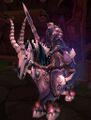
NPC model used for Baron Rivendare.
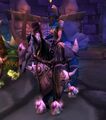
Lady Blaumeux model.
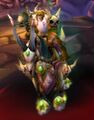
Thane Korthazz model.
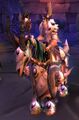
Sir Zeliek model.
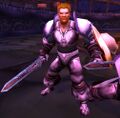
Death Knight Understudies are death knights with shields.

Lady Alistra uses a dark ranger skin
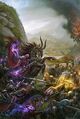
Death knights versus paladins in the Second War in WoW: Chronicle Volume 2.
Alternate version of the art.
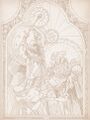
A death knight of the Second War in WoW: Chronicle Volume 2.
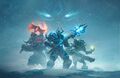
Wrath of the Lich King Classic key art.


- Wrath of the Lich King artwork
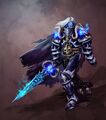
Death knight artwork
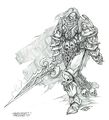
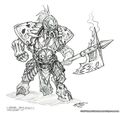
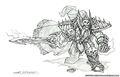
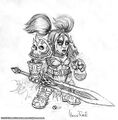
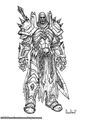
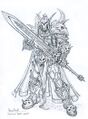
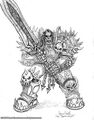
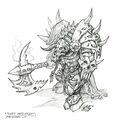
Death knight sketch
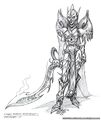
Blood elf
Draenei
Dwarf
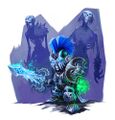
Gnome
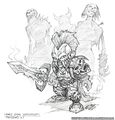
Gnome
Gnome
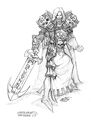
Human
Human
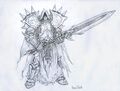
Human
Human
Night elf
Orc
Tauren
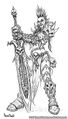
Troll
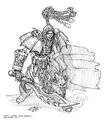
Undead
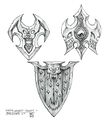
Death knight shields
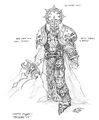
Death knight gothic armor
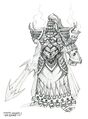
Death knight armor


- Warcraft series

Death Knight unit spite.

Death Knight unit portrait.
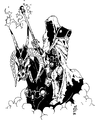
Death Knight art from the manual.
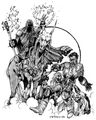
Art from the manual of a Death Knight with skeletons.
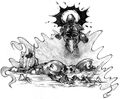
Art from the manual of a Death Knight casting Death and Decay.
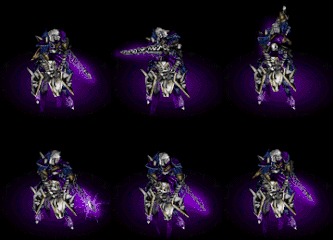
Death Knight hero unit model.
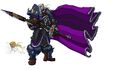
Concept art.
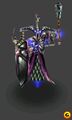
The "Death Knight" model during development that would be given to revenants.
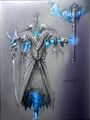
The "Death Knight" concept art in early development.
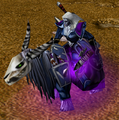
Female Death Knight Classic Model.
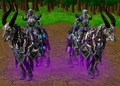
Female Death Knight Skin.
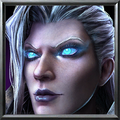
Female Death Knight Icon.


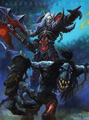
Arathyen, the Sun's Shadow, a blood elf death Knight.
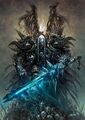
Krog the Deathfist, an orc death knight.
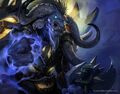
Asoren Darksnout, a tauren death knight.
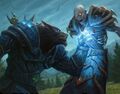
A worgen death knight versus a Forsaken spellcaster.
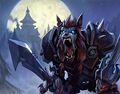
Jarrod Gravon, another worgen death knight.
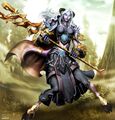
Ahkara, a draenei death knight.
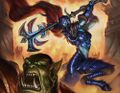
Skaala of the Somber Watch, a draenei death knight.
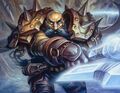
Brumdor Dreadforge, a dwarf death knight.
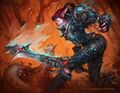
Shanis Bladefall, a night elf death knight.
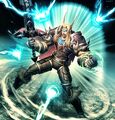
A blood elf death knight.
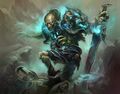
Elderguard Brennan, a Forsaken death knight.
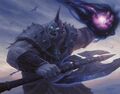
Zog, Herald of Death, an ogre death knight.
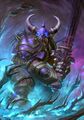
Dwarf Aric Stonejack


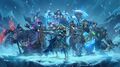
Knights of the Frozen Throne has normal heroes transform into terrifying Death Knights!


- Other
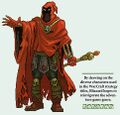
Death knight from Warcraft Adventures pre-release material.
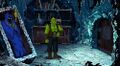
Death knight in a Temple of the Damned in Warcraft Adventures.
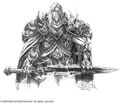
Death knight art in RPG books Alliance & Horde Compendium and Dark Factions.
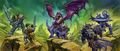
Art for World of Warcraft Miniatures Game product Souls of Vengeance.
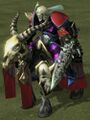
Unique Starcraft II editor remodeled asset from Warcraft III.
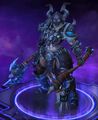
Sonya Death Knight skin in Heroes of the Storm.
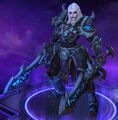
Sonya Deathbringer skin in Heroes of the Storm.


- Fan arts

Videos
- Death Knight opening cinematic since ''Wrath of the Lich King'
- Death Knights Wrath of the Lich King Classic
Patch changes
- Patch 9.0.1 (2020-10-13): Core race death knights now start at level 8 (was 55). Pandaren and allied race death knights now start at level 10 (was 58).
 Patch 8.3.0 (2020-01-14): Pandaren and allied race options for the class by pre-purchasing World of Warcraft: Shadowlands and start at a new starting zone in Icecrown at level 58.
  Patch 6.1.0 (2015-02-24): The requirement to have a character that's level 55 or higher to unlock the death knight as a playable class has been removed.
  Patch 5.3.0 (2013-05-21): The restriction limiting players to one death knight character per realm has been lifted.
 - Patch 5.0.4 (2012-08-28): Relics have been removed from the game.
- Patch 4.0.1 (2010-10-12):
- Blood is now a dedicated tanking spec; Frost and Unholy are now dedicated DPS.
- The way in which runes recharge has changed. Rather than each rune type (Blood, Frost, Unholy) regenerating simultaneously, they now fill sequentially.
- Patch 3.0.8 (2009-01-20): All multi-rune abilities generate 15 runic power.
- Patch 3.0.2 (2008-10-14): Added.
See also
References
- ^
 [8-30] In Service Of The Lich King
- ^ a b c d e https://worldofwarcraft.blizzard.com/en-us/game/classes/death-knight
- ^ a b c Classes of World of Warcraft
- ^ Warcraft II: Tides of Darkness manual, Ground Units of the Orcish Horde, Death Knight
- ^ a b Warcraft III - Undead -> Units -> Death Knight.
- ^ Death Knight Lore.
 Blizzard. Archived from the original on 2010-11-24. Retrieved on 2009-06-20.
- ^ Death knight starting experience
- ^ Nyorloth on the official forum
- ^ a b The Death Knights of Acherus
- ^ World of Warcraft: Chronicle Volume 3, pg. 174
- ^ Chris Metzen on Twitter (2014-05-25). Retrieved on 2017-07-18. “I think if he proved his loyalty beyond doubt - I can see rare instances.”
- ^ Ask CDev#Ask CDev Answers - Round 3
- ^ [8-30] The Endless Hunger
- ^ Ask CDev#Ask CDev Answers - Round 2
- ^ [10-45] The Dead and the Damned
- ^ [15-30] The Power to Destroy
- ^ Micky Neilson on Twitter: "I believe they feel positive emotions only briefly/rarely."
- ^ [8-30] Where Kings Walk
- ^ [8-30] Saurfang's Blessing
- ^ [15-30] Alas, Andorhal
- ^ Ask CDev
- ^ Corpulous' Mess Hall Rules
- ^ Delvar Ironfist#Quotes
- ^ "For Lies and Liberty"
- ^ Guide to the Side Effects of Reanimation
- ^ Prince Erazmin#Gossip
- ^ Official Q&A on Death Knights - "It's also important to keep in mind that even though the death knight is a hero class, that doesn't mean it is more powerful than the other classes, just that it will offer a very different playing experience."
- ^ Ghostcrawler - The Term "Hero Class" - "Hero class" meant that the DK started at a higher level (and also with a lot of blue gear and so on). We thought it made sense for the DK story because you're treated as a high-level character and veteran of past events. We didn't think that made as much sense for the monk, especially when there were so many low-level pandaren running around, and the (perhaps flimsy) justification for non-pandaren monks learning how to be monks from the pandaren. We might very well use hero classes again if it makes sense for a future class though."
- ^ Gerald Villoria 2008-05-09. Enter the Death Knight. GameSpy. Retrieved on 2009-06-20.
- ^ a b c Legion Class Preview Series: Death Knight
- ^ a b Get an Eye on an Even Dozen New Hero Talent Trees
- ^ Get an Early Look at Hero Talents in The War Within
- ^ The Emblazoned Runeblade#Description
- ^ a b This is my Runeblade...
- ^ The Dead and the Damned#Stage 7: Sieging the Citadel
- ^ Bloody Breakout#Notes
- ^ Dark Factions, 58-59
- ^ Dark Factions, pg. 59
- ^ Crown of the Deathlord
- ^ Shield of the Deathlord
- ^ Concept art gallery
- ^ WarcraftIII.net - Undead Heroes
- ^ Eurogamer WotLK interview
- ^ Dave Kosak on Twitter: "The DK starting experience was intended to show that a single DK was a merciless nigh-unstoppable force of nature. YMMV!"
- ^ The Emblazoned Runeblade#Progress
- ^ Voiceover: World of Warcraft: Rise of the Lich King
External links
 World of Warcraft Official Game Guide - Death Knight World of Warcraft Community Site Death Knight Forums (US)
 World of Warcraft Europe Death Knight Forums (EU)
| ||||||||


| |||||||||||||||||||||||